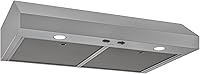
How to Choose an Under Cabinet Range Hood
Start with your cooktop width, then pick ducted or ductless venting and the airflow and noise you can live with. Most 30 inch ranges take a 30 inch under cabinet hood, and the vent type decides which parts you need.
On this page (15 sections)
- Start with the width of your cooktop
- Ducted or ductless: which venting fits your kitchen
- Airflow: how much power you need
- Noise: sones and decibels
- Controls and lights: what you will use each day
- Filters and cleaning: what needs replacing
- Ducted installs and duct size
- Plug-in or hard-wired: check the power before you buy
- Mounting height and clearance under the cabinet
- Rental, condo and older kitchens
- Budget, mid-range and premium tiers
- Three kitchens, three choices
- Common mistakes when you choose an under cabinet hood
- Checklist before you order an under cabinet range hood
- Which under cabinet range hood to pick
To choose an under cabinet range hood, start with your cooktop width, then decide how the air will leave the kitchen. Ducted and ductless hoods need different parts, and that choice shapes everything after it.
Under cabinet hoods mount beneath a cabinet, so the cabinet above your range sets the space you have to work with. This guide follows a set order, from width to venting, airflow, noise, controls, filters and a final checklist.
The examples below come from four hoods we compared on specs: the Broan-NuTone 413004, the Broan-NuTone Glacier, the AMZCHEF and the COSMO COS-5MU30.
New to ductless hoods? Read the ductless range hoods guide first, then come back here to pick a size and venting style.
Start with the width of your cooktop
Match the hood to your cooktop, or choose one that's a little wider. A 30 inch range takes a 30 inch hood, and a 36 inch range takes a 36 inch hood.
Measure the cooktop itself rather than the old hood, since the old hood may not have matched the range it sat over. Write the number down before you shop.
A wider hood covers more of the cooktop, but it also needs more cabinet space. For a shortlist by size, see best under cabinet range hoods.
How to measure for an under cabinet range hood
Measure the cooktop from the left edge to the right edge across the front. Write the number in inches, then measure again to confirm it.
Next, measure the space under the cabinet from side to side, and note the height from the cooktop to the cabinet bottom. Both numbers decide which hoods can fit that spot.
If you're unsure how the width rule applies to your range, what size range hood for a 30 inch cooktop walks through the common cases.
Ducted or ductless: which venting fits your kitchen
A ducted hood sends air outside, while a ductless hood cleans it with filters and returns it to the room. Each setup needs different parts, so check which one your kitchen can support.
A ducted hood needs a path to the outside, such as a wall or roof vent, and the duct must match the hood's outlet. Without that path, a ducted hood isn't an option.
A ductless hood needs no outside vent, but it depends on a charcoal filter to recirculate air. Grease and cooking odors are caught by the filters, and the filter needs replacing on a schedule.
A ductless hood does not remove heat, moisture or combustion gases. For a gas range or heavy frying, a ducted hood that vents outside is the stronger setup.
For a side-by-side look at the two setups, read ductless vs ducted range hood.
Convertible hoods can do both
A convertible hood can vent outside or recirculate air, but the kit you need depends on the model. The Glacier installs four ways, as a ducted or a non-ducted unit, and the COSMO converts with an optional carbon kit.
The catch is that ductless mode needs a charcoal kit, and that kit is often sold separately. For the trade-offs between the two modes, read convertible vs ductless range hood.
Airflow: how much power you need
For gas, a common rule of thumb is about 100 CFM for every 10,000 BTU of burner output. Check your range's BTU rating and the hood manual before you choose, since that rule is only a starting point.
Here is the rule of thumb in use. Burners that total 30,000 BTU point to about 300 CFM, and a 100 CFM hood matches only about 10,000 BTU.
CFM stands for cubic feet per minute, which measures how much air the hood moves. A higher number moves more air, but it doesn't make a hood right for your kitchen on its own.
The Broan-NuTone 413004 is rated at 100 CFM, while the Broan-NuTone Glacier is rated at up to 375 CFM. AMZCHEF gives two figures, 750 and 700 CFM, so check the number in the manual before you compare.
COSMO doesn't state a CFM figure, so check the manual before you compare it with the others. Maker CFM numbers are usually measured for ducted use, and airflow in ductless mode is often lower.
Why CFM alone doesn't decide the choice
A high CFM number helps only if the noise, controls and venting suit your kitchen too. A hood can move a lot of air and still be too loud for the room you cook in.
A ducted hood and a ductless hood with the same CFM number won't perform the same way in practice, since the air takes a different path in each setup. Compare the setups as well as the numbers.
Noise: sones and decibels
Lower sones or decibels mean a quieter hood, so compare the top speed you'll use most. Sones measure loudness on a scale where a higher number sounds louder to the ear.
Decibel ratings, written as dB or dBA, are another way brands show noise, so the two numbers don't line up exactly. Check the top-speed number too, since the low setting is always the quietest.
Broan-NuTone's Glacier shows why you should check the number yourself. The maker gives two figures, 1.5 sones and 5.5 sones at the 375 CFM maximum, so confirm in the manual which speed each one belongs to.
COSMO says its hood can run as low as 50 dB on its lowest speed, under optimal conditions with rigid ducting. The AMZCHEF is rated at 63 dB, which you can set beside the COSMO's decibel rating.
Controls and lights: what you will use each day
Push buttons are the simplest to use, while touch, remote and gesture controls add hands-free use. The right choice depends on how often you'll change the fan speed while cooking.
The Broan-NuTone 413004 uses rocker switches for its light and a two-speed fan. The Glacier uses a push-button control with three speeds and a single-intensity LED module.
The 413004 takes a bulb of up to 75 watts, and the bulb isn't included. Broan-NuTone says that if you use an incandescent bulb, you should buy its light guard, part S99110437, separately.
The COSMO includes its light bulbs. The AMZCHEF pairs touch, remote and gesture control with an LCD screen and a timer, and it uses two 1.5 watt LED lamps.
Filters and cleaning: what needs replacing
Look for dishwasher-safe grease filters, and plan for charcoal filter changes if you recirculate air. Grease filters trap cooking oil, so they need regular cleaning.
The AMZCHEF and the Glacier both use dishwasher-safe filters. The COSMO uses reusable aluminum mesh filters, and COSMO says the multi-layer design traps grease more effectively.
Charcoal filters are a different job, since most makers sell them as replace-only. The 413004 has a replaceable charcoal filter for its ductless setup, so check your manual for the part.
Broan-NuTone lists filter model HPF30 for the Glacier and recommends changing it every 6 months. Keep a note of the change date so the schedule is easy to follow.
Check the filter model before you order
Grease filters and charcoal filters are sold by model, so match the number before you order a replacement. A filter that looks the right size can still be the wrong part for your hood.
Check the model number in the manual or on the hood, then compare it with the part you're buying. Write the number down so the next order takes a minute.
Of these four hoods, only two give a part number. Broan-NuTone names the HPF30 for the Glacier, and COSMO names the CFK4 carbon kit for ductless use, so for the other two, look in the manual.
Ducted installs and duct size
Match the duct size to the hood's outlet, and use the parts the maker supplies.
The AMZCHEF has a 6 inch air outlet, and the COSMO uses a 5 inch round duct. The two sizes don't swap, so check the outlet before you buy a duct.
COSMO says HVAC tape is required for installation, and the hood comes with a backdraft damper and flexible ducting.
The Glacier takes a 7 inch round vertical duct or a 3.25 x 10 inch rectangular one. It includes a damper for the rectangular opening, and the round duct's damper is sold separately.
Check the manual for the transition and duct size before you buy any duct. If the duct size in your wall doesn't match the outlet, you'll need a transition, so measure first.
Plug-in or hard-wired: check the power before you buy
Check whether the hood plugs in or needs a hard wire before you buy, since the power setup changes the install. A plug-in hood avoids new wiring, which can matter in a rental.
The COSMO includes a 3-prong plug. The other three hoods don't name a plug, so check the manual for the power connection before you order.
If a hood is hard-wired, follow the manual and use a qualified electrician if you're unsure. Don't guess at the wiring.
For the step-by-step mounting, read how to install an under cabinet range hood.
Mounting height and clearance under the cabinet
Mount the hood at the height the maker gives, and measure from the cooktop to the cabinet before you drill. The manual's clearance number beats a rule of thumb.
Broan-NuTone says the 413004 and the Glacier should be installed at least 18 inches above the cooktop. If you own a Broan-NuTone hood, the Broan-NuTone website is the place to look up its manual.
The 413004, the Glacier and the AMZCHEF are each about 6 inches tall, and the COSMO is 5.5 inches tall. All four are sold as 30 inch hoods, so check the cabinet width before you order.
Measure the cabinet bottom and the cooktop, then choose a height the manual allows. Don't mount the hood lower than the maker's guidance.
Rental, condo and older kitchens
If you can't add a duct, a ductless or plug-in hood is usually the first option to check. Renters and condo owners often can't change a wall or roof, so a ductless hood avoids that work.
Check your lease or association rules before you drill or run any wiring. A plug-in option may be the simplest choice, and the ductless range hood buying guide for no-vent kitchens covers that route in more detail.
If you're weighing a hood against an over-the-range microwave, read under cabinet range hood vs microwave. The two solve the same problem in different ways.
Budget, mid-range and premium tiers
Budget, mid-range and premium are rough tiers, and they mostly describe features rather than airflow. Use them as a guide to what you get, not as a promise of performance.
The 413004 and the COSMO sit in the budget tier. The 413004 is the simplest of the four, with rocker switches, a two-speed fan and a ductless-only setup, and the COSMO adds push buttons, reusable mesh filters and a plug.
The AMZCHEF is mid-range, with touch, remote and gesture control and a timer. The Glacier is the premium pick of the four, with a four-way convertible install, UL-Listed and HVI-2100 certified status, and a 3-year warranty on the LED module.
A higher tier doesn't make a hood right for your kitchen. Match the width, vent type and filters first, then pay for the features you'll use every day.
Three kitchens, three choices
Your kitchen's venting decides the hood more than any feature does. These three cases cover most buyers.
A condo or rental with no duct: look at a ductless hood or a convertible with its carbon kit, and plan for filter changes. The 413004 and the COSMO with its CFK4 kit are the two examples here.
A house with a duct already in the wall: match the hood's outlet to that duct, 6 inches for the AMZCHEF or 5 inches for the COSMO, and you keep the stronger ducted setup. Check the duct size before you order.
A gas range with a vent possible: choose a ducted hood and vent it outside, then check the airflow against your range's BTU rating. The manual and a qualified pro can confirm the setup.
Common mistakes when you choose an under cabinet hood
The biggest mistake is shopping by CFM alone. Noise, venting and filters decide whether you'll like the hood a year from now.
Others are easy to avoid:
- Measuring the old hood instead of the cooktop
- Forgetting that the 413004's bulb isn't included
- Assuming a ductless hood comes with its charcoal filter
- Mixing up duct sizes, since the AMZCHEF uses 6 inches and the COSMO 5
Write down the model number of whatever hood you buy, so you can reorder its filters later.
Checklist before you order an under cabinet range hood
Run through this list before you order, so the hood fits your space and your venting plan. Each item is a number or a choice you can check in the manual.
- Cooktop width, edge to edge, in inches
- Cabinet opening width and height above the cooktop
- Ducted or ductless, and the outside path if you vent
- Airflow in CFM, checked against your range's BTU rating
- Noise rating at the top speed you'll use
- Controls and lights you'll use every day
- Filter types and the model number for any replacement
- Power setup: plug-in or hard-wired
Check each item against the maker's manual before you place the order.
Which under cabinet range hood to pick
Start with width and venting, then choose the airflow, noise and controls that fit how you cook.
Pick the Broan-NuTone 413004 if you need a basic ductless insert with a replaceable charcoal filter and a 6 inch height. Pick the Broan-NuTone Glacier if you want a three-speed push-button hood with mesh filters, and check its sone rating in the manual first.
Pick the AMZCHEF if you want touch, remote and gesture controls with a timer, and confirm its CFM number before you buy. Pick the COSMO if you can vent outside, and plan for its separate kit if you ever need ductless use.
If you're still deciding on size, see best 36 inch under cabinet range hoods for wider ranges.
Frequently asked questions
What size under cabinet range hood do I need?
Match the hood to your cooktop width, so a 30 inch range takes a 30 inch hood and a 36 inch range takes a 36 inch hood. Measure the cooktop edge to edge before you order, since the width decides how much of the cooktop the hood covers.
Do I need a ducted hood or a ductless one?
If you can run a duct to the outside, a ducted hood is the stronger setup, especially over a gas range. If you can't vent outside, a ductless or convertible hood with a charcoal filter is the usual route, and the filter needs changing on a schedule.
How many CFM do I need for a range hood?
For gas, a common rule of thumb is about 100 CFM for every 10,000 BTU of burner output. Check your range's BTU rating and the hood manual, since maker CFM numbers are usually measured for ducted use and airflow in ductless mode is often lower.
Can I install an under cabinet hood myself?
Follow the manual step by step, and use a qualified electrician if you're unsure about the wiring. That's the safe route for any hood that needs a hard connection to the house, while a plug-in hood skips that step but still needs a firm mount.