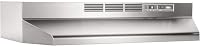
Under Cabinet Range Hood vs Microwave Hood
An under cabinet range hood only moves air, while an over the range microwave cooks food and moves air too. Pick the hood if you already have a microwave and want a dedicated fan, and pick the microwave if you need one appliance in a small kitchen.
On this page (17 sections)
- Under cabinet range hood vs microwave: what each one does
- Which one moves more air?
- What kind of cooking favors each one
- The specs side by side
- Lights and controls
- Noise and fan sound
- Installation effort
- Venting options on a microwave hood
- Size and space above the cooktop
- When an under cabinet hood is the better pick
- When an over the range microwave is the better pick
- Cleaning and filter upkeep
- Replacing one with the other
- Four rules that settle most kitchens
- Which fits your kitchen? Three common setups
- Mistakes to avoid
- Under cabinet range hood or microwave: which to pick
An under cabinet range hood is a fan that mounts under a cabinet and pulls cooking air away from the stove. An over the range microwave combines a microwave and a fan in one unit that sits above the cooktop.
If you're still choosing a hood type, our ductless range hoods guide covers every option. This page compares the two appliances, so you can see which one fits your kitchen and how you cook.
 Best for stronger airflow over the cooktop
AMZCHEF 30 Inch Under Cabinet Range Hood
 Best for one appliance in a small kitchen
GE 30 Inch Over-the-Range Microwave
Under cabinet range hood vs microwave: what each one does
Both units mount above the cooktop, so the real question is what else you need from that space. A hood only moves air, while a microwave also heats food.
What an under cabinet hood does
An under cabinet hood mounts under a cabinet and pulls smoke, steam and odors up and away from the cooking area. AMZCHEF gives its 30 inch model 700 CFM of airflow.
Its 6 inch air outlet means you should plan on a duct run to the outside. Measure that path before you order, since the duct is the biggest job in the install.
What an over the range microwave does
An over the range microwave gives you a microwave, a light and a fan in one unit. GE's 30 inch model is 1.6 cubic feet, runs at 1000 watts and has a 300 CFM fan with two speeds.
GE describes that fan as recirculating, so air goes back into the kitchen through a charcoal filter. The unit also has 10 power levels and auto defrost, and its turntable switches off so a large dish has room to sit.
Which one moves more air?
The AMZCHEF hood gives the bigger airflow figure, but the two numbers come from different setups. Makers usually rate airflow for ducted use, and airflow in recirculating mode is often lower.
AMZCHEF shows two figures for its hood, 750 CFM in the product name and 700 CFM in the specs, so this page uses the lower one.
GE's 300 CFM comes from a fan that recirculates through a charcoal filter, so it isn't a like-for-like match for a ducted number.
For a kitchen that can vent outside, the hood is the stronger choice. For a kitchen that can't vent, the microwave's recirculating fan is the practical option, even though its figure is lower.
A recirculating fan filters grease and odors, but it doesn't take heat, steam or combustion gases out of the room. If you cook on gas, that makes a ducted hood the stronger setup.
Airflow only helps if the hood catches the smoke. A hood sized to the cooktop and mounted at the height the manual gives will do more than a bigger fan hung too high.
What kind of cooking favors each one
Heavy frying and searing favor the under cabinet hood, while reheating and simple cooking suit the microwave. The right unit depends on how hard your cooktop works most days.
Searing, frying and stir-frying put smoke and grease into the air quickly. A hood with a dedicated fan is the better match for that kind of cooking.
Reheating, steaming vegetables in the microwave and occasional cooking fit an over the range microwave well. The microwave does most of the cooking, so the fan's job is lighter.
If you cook big meals most nights, lean toward the dedicated hood. A combo unit covers light use well, and a dedicated hood covers heavy use better.
The specs side by side
Both units are about 30 inches wide, so width doesn't separate them. Mounting and airflow do the work here.
| Product | Best for | Width | Airflow | Mounting | Our score |
|---|---|---|---|---|---|
| AMZCHEF 30 Inch Under Cabinet Range Hood | stronger airflow over the cooktop | 30 in | 700 CFM | Under cabinet | 8.7 |
| GE 30 Inch Over-the-Range Microwave | one appliance in a small kitchen | 29.9 in | 300 CFM | Over the range | 8.1 |
We compared the specs and what buyers often mention, then scored each unit against a kitchen with one space above the cooktop. Our score weighs specs, features and buyer feedback against what you're shopping for.
The AMZCHEF scores higher because it's a dedicated fan with touch and remote controls and dishwasher-safe filters. The GE scores lower on airflow, but it's the better fit when one appliance has to do both jobs.
Lights and controls
The AMZCHEF hood uses touch, remote and gesture controls, while the GE microwave uses a touch keypad and digital display. Both have LED lights over the cooktop.
The AMZCHEF includes two 1.5 W LED lamps and a timer setting for the fan. AMZCHEF suggests the remote for times when you're busy with kids or pets, since you can change the fan without touching the panel.
GE's one-touch express cooking and four convenience settings make the microwave quick to use. Its child lock can be turned off when you don't need it.
Noise and fan sound
AMZCHEF gives its hood a 63 dB noise figure, and GE doesn't publish one for its microwave. A higher decibel number means a louder fan.
That leaves nothing to set against AMZCHEF's 63 dB, so quiet is a factor to weigh with care. Use the lower speed for everyday simmering, and save the high speed for searing and frying.
Installation effort
A ducted hood is the bigger install, since it needs a duct run and a hole for the vent. A recirculating microwave skips the duct run, but it still needs secure mounting and a power source.
Microwaves are heavy. GE's weighs 40 lb and Black+Decker's weighs 57.4 lb, so plan on a second person to lift either one.
Check how each unit gets power before you order, since some appliances plug in and others are hard-wired. Follow the manual, and use a qualified electrician if you're unsure about any wiring.
Venting options on a microwave hood
A microwave hood either recirculates air or vents it through a duct, so read which one your model does. GE describes its 30 inch model as recirculating, with a charcoal filter.
Black+Decker's 1.9 cubic foot model ships with grease filters and an exhaust adapter, and it names no charcoal filter. An exhaust adapter suggests a duct connection, so confirm the venting options in the manual before you plan the install.
Size and space above the cooktop
The GE microwave is roughly 10 inches taller than the AMZCHEF hood, and the hood is deeper. Height is the main space trade-off, since a taller unit hangs lower over the burners.
| Unit | Width | Height | Depth |
|---|---|---|---|
| AMZCHEF hood | 29.8 in | about 6 in | 19.7 in |
| GE microwave | 29.88 in | 16.12 in | 15.56 in |
Measure from the cooktop to the cabinet bottom, then check each maker's manual for the mounting height. A tape measure held at that height shows how much room a pot has underneath.
When an under cabinet hood is the better pick
An under cabinet hood is the better pick when you already own a microwave you like and want a dedicated fan. It also suits cooks who fry, sear or stir-fry often.
- You already have a microwave you like.
- You cook often and want a fan with its own controls.
- You can run a duct to the outside.
If you're weighing a hood that mounts on the wall instead, read our under cabinet vs wall mount range hood comparison. For more hood options in this width, see our best under cabinet range hoods list.
When an over the range microwave is the better pick
An over the range microwave is the better pick when you need one appliance and have little counter space. It frees up the counter, since the microwave sits above the cooktop instead of on it.
- You have little counter space and want one appliance.
- You want a light over the cooktop and a turntable.
- You can't vent outside, and the GE's recirculating fan fits that kitchen.
If you have no outside vent, our range hood without a vent guide covers recirculating options, including microwave hoods.
Cleaning and filter upkeep
Both units need some upkeep, and it's different for each. The hood's stainless filters are the part you clean most often, while a microwave's charcoal filter needs replacing on a schedule.
AMZCHEF says its stainless steel filters are dishwasher safe, which makes cleaning simple. GE's charcoal filter is replaceable, so plan to swap it based on how often you cook.
Clean the hood filters when they look greasy, and swap the charcoal filter when odors come back.
Filters fit by model number, and GE's is JVM3160RFSS. GE Appliances is the place to look up the manual and the filter part number.
Replacing one with the other
Both units are about 30 inches wide, so one can often take the other's spot, but the mounting and power details differ. Walk through the swap before you buy.
Going from a microwave to a hood means the microwave needs a new home on the counter, a cart or a shelf. Pick a spot near an outlet and away from the cooktop's heat, and leave room to open the door.
Going from a hood to a microwave means you give up a dedicated fan, and GE's fan recirculates air. The unit also needs mounting that holds its 40 lb, so follow the manual.
The two also age differently. When the fan is part of the microwave, a microwave that wears out takes the ventilation with it, while a separate hood and microwave can each be replaced on their own.
Four rules that settle most kitchens
Work through these in order, and stop at the first one that fits your kitchen.
- No duct is possible, and counter space is tight: choose the microwave.
- A duct is possible, and you cook on gas or fry often: choose the hood.
- You love your current microwave and can duct: keep it and add the hood.
- No duct, but you cook heavily: compare a ductless hood with the microwave, since both recirculate.
The fourth case is the one people miss. Without a duct, neither choice sends air outside, so compare the numbers: Broan lists 100 CFM for its 413004 ductless hood, and GE lists 300 CFM for its recirculating microwave fan.
Which fits your kitchen? Three common setups
A kitchen with no outside vent usually points to a recirculating microwave, while a remodel with room for a duct points to an under cabinet hood. Your setup matters more than any single number.
A rental with no outside vent
A rental kitchen usually can't take a new duct, so a recirculating microwave often makes the most sense. If you already own a microwave you like, a ductless hood is the other route for that space.
A remodel with room for a duct
A remodel where you can run a duct suits an under cabinet hood, since the hood mounts right under the cabinet. You also get a dedicated fan with its own controls, separate from the microwave.
With the AMZCHEF, plan a duct run that matches its 6 inch outlet. Measure the path from the outlet to the outside wall or roof, and note every bend.
A kitchen that already has a microwave
If your microwave works well, keep it on the counter and add an under cabinet hood over the cooktop. That gives you a dedicated 700 CFM fan without buying a new microwave.
Mistakes to avoid
Most mistakes come from expecting one unit to do both jobs or from skipping the measurements. Watch for these five.
- Expecting an under cabinet hood to heat food.
- Expecting a recirculating microwave fan to match a ducted hood's airflow.
- Buying a microwave without checking its height and the space above the cooktop.
- Lifting a 40 lb or 57.4 lb microwave into place alone.
- Ordering a replacement filter without checking the model number.
Under cabinet range hood or microwave: which to pick
Pick the under cabinet range hood if you already have a microwave and want a dedicated fan. Pick the over the range microwave if you need one appliance and have little counter space.
Measure your kitchen first, then compare the mounting height and the duct path for each. If you're still choosing a hood, our how to choose an under cabinet range hood guide walks through width, venting and noise.
Frequently asked questions
Is an over the range microwave a good replacement for a range hood?
It can be, if you need a microwave and a fan in one unit and you don't plan to vent outside. A recirculating fan filters grease and odors but doesn't remove heat or steam, so it suits lighter everyday cooking better than frequent frying.
Can an under cabinet range hood replace a microwave?
No, an under cabinet hood only moves air and does not heat food, so you still need a microwave or another way to cook. Its job is clearing smoke, steam and odors from the cooktop, so keep the microwave you already use and plan counter space for it.
Do over the range microwaves need a charcoal filter?
Only if they recirculate air, as GE's 30 inch model does. Its charcoal filter is replaceable, so check the manual for the right part number before you order, since filters fit by model number and a filter for another unit may not fit.
Can I mount an under cabinet range hood without a cabinet?
Under cabinet hoods are made to mount under a cabinet or shelf, so check the maker's manual before you mount one another way. If you have no cabinet above the cooktop, a wall mount hood, which is built for that spot, is the simpler choice.