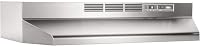
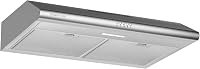
Convertible vs Ductless Range Hood
A convertible range hood can be set up more than one way, while a ductless range hood has no duct and only recirculates air through its filters. Pick convertible when you can vent outside, and pick ductless when you can't vent at all.
On this page (19 sections)
- Convertible vs ductless range hood: what the words mean
- Which one is easier to install?
- The specs side by side
- Same footprint, different jobs
- Airflow: a bigger number with a catch
- Duct size and route
- Which kitchens suit a convertible hood?
- Which kitchens suit a ductless hood?
- Worked example: three kitchens
- Renting, landlords and upgrades
- Lights and bulbs
- Mounting, wiring and power
- Filters and upkeep
- Finish and edges
- Cooking on gas
- How loud each one runs
- Common mistakes with the word convertible
- Questions to ask before you buy
- Convertible or ductless range hood: which to pick
A convertible range hood can be set up more than one way, so it fits more than one kitchen. A ductless range hood has no duct at all, and it cleans the air with filters before sending it back into the room.
If you're still choosing a hood type, our ductless range hoods guide compares the full set of options. This page focuses on two terms that often get mixed up.
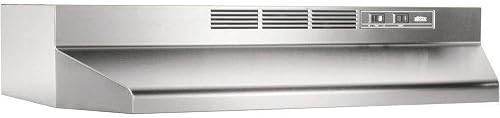
 Best for flexible duct routes
Broan-NuTone Convertible Under-Cabinet Range Hood
Convertible vs ductless range hood: what the words mean
Convertible means the hood has more than one way to be set up, and ductless means it has no outside duct at all. The two words sound alike, but they describe different installs.
What convertible means on a range hood
Makers use the word in two ways. Some convertible hoods offer several mounting layouts for a duct, and others switch between ducted and ductless with a carbon filter kit.
Broan's hood here is the first kind, with four ways to mount it. Cosmo's COS-5MU30 and VIKIO's 30 inch wall hood are the second kind, and both need a carbon kit that is sold separately.
Broan describes no ductless setup for its convertible hood, so don't buy it expecting to recirculate air.
What a ductless range hood does
A ductless hood pulls air through a grease filter and a charcoal filter, then sends the filtered air back into the room. The Broan 413004 is non-ducted only, so it has no duct option at all.
It doesn't remove heat, moisture or combustion gases from the room. That matters most if you cook on a gas range or fry often.
A ductless hood still needs upkeep, though. Its grease filter needs cleaning, and the charcoal filter needs swapping on a schedule, so plan for that before you buy.
Which one is easier to install?
A ductless hood is usually the simpler install, since it skips the duct run to the outside. A convertible hood needs a duct run, so the route and the mounting layout must match.
A ductless install still depends on the charcoal filter, which has to be in place and kept fresh. Treat that filter as part of the setup, not an afterthought.
For the steps, read our how to install a ductless range hood guide or our how to install an under cabinet range hood guide.
The specs side by side
Both hoods are 30 inches wide, so the airflow and venting rows show the real difference.
| Product | Best for | Width | Airflow | Venting | Our score |
|---|---|---|---|---|---|
| Broan-NuTone Convertible Under-Cabinet Range Hood | flexible duct routes | 30 in | 230 CFM max | Ducted, four layouts | 8.6 |
| Broan-NuTone 413004 Ductless Hood | a no-vent kitchen | 30 in | 100 CFM | Non-ducted only | 8.5 |
We compared the specs and what buyers often mention, then scored each hood against what a convertible or no-vent kitchen needs. Our score weighs specs, features and buyer feedback against what you're shopping for.
The convertible hood scores a bit higher because it offers more duct layouts and a fingerprint resistant finish. The 413004 scores a bit lower on airflow, but it's the right pick when a duct isn't possible.
Same footprint, different jobs
The two hoods are the same size on paper. Each is 30 inches wide, 17.5 inches deep and 6 inches tall, and the convertible weighs 12 lb against 10 lb for the 413004.
That makes them easy to compare in a cabinet gap, but the footprint says nothing about venting. Check the mounting details in each manual before you treat one as a swap for the other.
Airflow: a bigger number with a catch
The convertible hood gives 230 CFM as its maximum blower figure, while the 413004 gives 100 CFM. Both are maker figures, and makers usually measure them with a duct in place.
The 230 figure is a maximum, so everyday speeds will usually move less air. The 413004's 100 CFM figure is for its non-ducted setup, so compare it with care.
Both hoods have two fan speeds, so neither one gives you a third speed for heavy cooking. Airflow only helps when the hood catches the smoke, so mounting height and width matter as much as the number.
Duct size and route
The duct has to match the hood's outlet, and every extra bend makes the fan work harder. Measure both before you buy any tubing.
Matching the outlet
Outlet sizes differ from hood to hood. Cosmo's COS-5MU30 uses a 5 inch round duct, while AMZCHEF's hood, VIKIO's wall hood and SNDOAS's wall hood all use 6 inch outlets.
For Broan's convertible hood, read the outlet size in the manual before you order tubing. A duct that doesn't match the outlet needs an adapter, and each adapter is one more place for air to leak.
Sealing the joints and planning the route
Some makers call for HVAC tape at the joints. Cosmo says it is required for its hood, so follow your own manual on this point.
Keep the run short and straight where you can, and mark the route before you cut anything.
Which kitchens suit a convertible hood?
A convertible hood suits a kitchen that can vent outside and has a duct route that needs a specific layout. It's the better choice when a standard mount won't line up with the duct.
- You can vent outside.
- The duct route is short, bent or hard to fit.
- You want a fingerprint resistant stainless finish.
Check the mounting layout that matches your route before you buy, since the wrong layout can make the duct run harder.
If you're still deciding between ducted and ductless, read our ductless vs ducted range hood comparison. For more ducted under cabinet picks, see our best under cabinet range hoods list.
Which kitchens suit a ductless hood?
A ductless hood suits a kitchen with no outside vent, such as a rental, condo or apartment. It also works for light to moderate cooking, and it fits a kitchen where the only outside wall is taken by a window or door.
- You can't run a duct to the outside.
- You cook light to moderate meals.
- You don't mind replacing a charcoal filter on a schedule.
For ductless models that fit under a cabinet, see our best 30 inch ductless under cabinet range hoods list.
Worked example: three kitchens
The right hood follows from the duct route and your plans for the kitchen. These three cases cover most buyers.
A condo with no outside wall near the range
No duct is possible, so the 413004 is the fit. Budget for its charcoal filter changes, and keep the grease filter clean.
A house where the duct has to leave at an awkward spot
A duct is possible, but the standard exit lines up badly with the wall or ceiling. Broan's convertible hood fits, because its four mounting ways exist for that problem.
A renter who may move to a house with a duct
A hood that can switch modes keeps both options open. Neither hood in this pair does that, but COMFEE's 30 inch under cabinet hood installs in exhaust or recirculation mode, as our COMFEE 30 inch under cabinet range hood review explains.
Renting, landlords and upgrades
If you rent, ask your landlord before you cut a hole for a duct or change any wiring. A ductless hood avoids that conversation, since it needs no outside vent.
A 413004 can't be upgraded to ducted use, because Broan built it as non-ducted only. A convertible hood keeps the ducted option open, so it's the choice if you might add an outside vent later.
Check your lease or building rules first, since some buildings limit changes to the outside wall or roof.
Lights and bulbs
The convertible hood has one light level, and its bulb is sold separately. The 413004 takes an LED bulb up to 75 W, which is also not included.
Broan says an incandescent bulb in the 413004 needs light guard S99110437, bought separately. The 413004 has separate rocker switches for the light and the two-speed fan, so you can run one without the other.
Mounting, wiring and power
Both types need power, and wiring is the part to handle with care. Some hoods plug in and others are hard-wired, so check how yours connects before you order.
Follow the manual for wiring, and use a qualified electrician if you're unsure about any connection. Broan-NuTone's site is the place to look for manuals and parts for either hood.
Broan says the 413004 should sit at least 18 inches above the cooktop, so measure that gap before you mount it. For the convertible hood, read its manual for the mounting height.
Filters and upkeep
Both hoods have a washable filter. Broan says the convertible hood's mesh filter is dishwasher safe, and the 413004's quick-release filters can go in the dishwasher.
The 413004 also needs its replaceable charcoal filter to recirculate air. Charcoal filters need replacing on a schedule, so keep a spare on hand if you cook often.
Finish and edges
Both hoods come in stainless, and the convertible model adds a finish that Broan says resists fingerprints. The convertible model is also rust proof, according to its features.
Broan describes the 413004's sides as mitered and its bottom edge as hemmed, with no sharp edges.
Cooking on gas
If you cook on gas, a ducted hood is the stronger choice, because a ductless hood doesn't send combustion gases outside. That holds for both hoods in this comparison.
The convertible hood can vent outside, so it's the better fit for a gas range. The 413004 recirculates air, so it works best for light cooking.
Talk to a qualified pro if you're unsure how your gas range and hood should work together.
How loud each one runs
Broan gives the convertible hood a noise figure of 6.5 sones, and it doesn't publish one for the 413004. A lower sone number means a quieter fan, so use it to compare hoods that share the same kind of figure.
Use the lower speed for everyday cooking, and save the higher speed for frying and searing.
Common mistakes with the word convertible
Most mistakes start with reading "convertible" as "ductless-capable". Watch for these five.
- Buying a convertible hood for a kitchen with no duct, when its manual describes only ducted layouts.
- Ordering a carbon kit for a hood whose maker doesn't offer one for that model.
- Expecting a 413004 to switch to venting outside later, since Broan sells it as non-ducted only.
- Ordering tubing before checking the hood's outlet size.
- Treating 230 CFM and 100 CFM as a fair comparison without asking how each hood is vented.
When the product name says convertible, read the manual's installation section first and see which modes it covers.
Questions to ask before you buy
Ask these questions before you order, since the answers point you to one setup or the other. Each one takes a few minutes to check.
- Can I run a duct to the outside, and where would it come out?
- Does my building or lease allow a new outside vent?
- What does "convertible" mean for this model: mounting layouts, a ductless mode, or both?
- Which filter fits my model number, and how often will I swap it?
A no to the first two questions points to ductless. If you can answer yes to both, a convertible hood gives you more duct options.
Convertible or ductless range hood: which to pick
Pick the convertible hood when you can vent outside and need flexible duct routing, and pick the ductless hood when you can't vent at all. Both are 30 inch hoods, so the space above your cooktop should help decide.
- Pick convertible if you can run a duct and the route is the hard part.
- Pick ductless if a duct is ruled out by your building, your wall or your landlord.
Check your kitchen first, then match the duct route or the no-vent setup to the hood. If you want one hood that can do either job, look for a model whose manual covers both modes.
Frequently asked questions
Is a convertible range hood the same as a ductless one?
No, since a convertible hood can be set up more than one way, which can mean several mounting layouts or a switch between ducted and ductless modes. A ductless hood has no duct and recirculates air through its filters, so check what convertible means for your model.
Can a convertible range hood run without a duct?
It depends on what the maker means by convertible, since Broan's convertible hood here is set up for ducting and describes no ductless mode. Cosmo's COS-5MU30 converts with its CFK4 carbon kit, sold separately, so check the manual before you plan a no-vent install.
Do convertible range hoods need a special filter?
Not usually for ducted use, since the Broan convertible hood uses a dishwasher-safe mesh filter. A ductless hood like the 413004 does need a charcoal filter, and that filter must match your model number, so check the number on your hood before you order.
Is a convertible range hood louder than a ductless one?
Broan rates the convertible hood at 6.5 sones and gives no noise figure for the 413004, so the two can't be compared directly. Lower sones means a quieter fan, so look for a noise figure on any hood if a quiet kitchen matters to you.