Ductless vs Ducted Range Hood: Which Is Better?
A ducted range hood vents air outside through a duct, and a ductless range hood filters the air and sends it back into the room. Pick ductless when you can't run a duct, and pick ducted when you can vent outside.
On this page (14 sections)
- Ductless vs ducted range hood: how each one moves air
- Which setup clears the air better?
- What you cook decides the choice
- Worked example: three kitchens, three picks
- The specs side by side
- Measure your kitchen before you choose
- Which kitchens suit a ductless hood?
- Which kitchens suit a ducted hood?
- Install and upkeep: ductless vs ducted
- Lights, fan speeds and noise
- Can you switch between them later?
- Common mistakes to avoid
- A three-step way to decide
- Which to pick: ductless or ducted range hood
A ducted range hood vents air outside through a duct. A ductless range hood pulls air through filters and sends it back into the room, so it needs no outside vent.
If you're still deciding between hood types, our ductless range hoods guide covers every option. This page compares the two main setups, then gives a clear pick for each kind of kitchen.
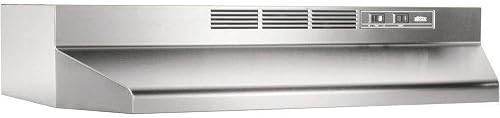 Best for kitchens with no outside vent
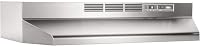
Broan-NuTone 413004 Ductless Hood

Ductless vs ducted range hood: how each one moves air
Both types use a fan to pull cooking air up from the cooktop. The difference is what happens next: a ducted hood sends that air outside, and a ductless hood filters it and keeps it indoors.
What a ducted range hood does
A ducted hood needs a duct, which is a tube that runs from the hood to an outside wall or the roof.
Cosmo's COS-5MU30 uses a 5 inch round duct and suits top or back venting. Its box includes flexible ducting and a backdraft damper.
What a ductless range hood does
A ductless hood, also called a recirculating hood, runs cooking air through a grease filter and a charcoal filter. The grease filter catches grease, and the charcoal filter helps with odors before the air goes back into the room.
A ductless hood does not remove heat, moisture or combustion gases from the room. That matters most if you cook on a gas range.
Broan's 413004 is the plain example, since Broan says it installs as non-ducted only with a charcoal filter. For a walk-through of the parts, read our explainer on what a ductless range hood is.
Which setup clears the air better?
A ducted hood is the stronger setup for heavy cooking, because it sends smoke, steam and heat outside. A ductless hood keeps that air in the kitchen, even after its filters catch the grease.
Airflow numbers need care. Makers usually rate CFM for ducted use, and airflow in ductless mode is often lower, so a ducted number and a ductless number are not the same thing.
Broan lists 100 CFM for the 413004, which only runs ductless. We found no CFM figure for the COS-5MU30, so check its manual if airflow matters to you.
Steam from boiling pots is the other reason many cooks pick ducted. The hood moves that steam out of the room, while a ductless hood leaves it in the kitchen.
For a fuller look at what ductless hoods can and can't do, read do ductless range hoods really work.
What you cook decides the choice
Light cooking suits a ductless hood, while frying, searing and gas cooking suit a ducted hood. Your everyday meals matter more than the occasional big cook.
Boiling pasta, heating soup or sautéing vegetables puts less smoke and grease into the air. A ductless hood with fresh filters is a reasonable fit for that kind of cooking.
Frequent frying, stir-frying and high-heat searing put much more smoke, steam and grease into the air. A ducted hood that vents outside keeps that air out of the kitchen.
Gas burners add combustion gases to the mix. That is the main reason to choose ducted if you cook on gas, since a ductless hood does not send those gases outside.
Worked example: three kitchens, three picks
The pick follows from three facts: whether a duct is possible, what you cook and what fuel the range uses. Here is how those facts play out in three common kitchens.
A condo with an interior cooktop
The cooktop sits on an inside wall, a duct isn't possible, and the owner mostly cooks eggs, pasta and sautéed vegetables.
A ductless hood like the Broan 413004 fits, as long as the owner swaps the charcoal filter on a schedule.
A house with an outside wall behind the range
The range backs onto an exterior wall, and the household fries fish most weeks. The Cosmo COS-5MU30 fits better, since a short duct can run straight through the wall behind it and it takes a back vent.
A rental with a gas range
The lease rules out a new hole in the wall, so a duct is out. A ductless hood is the only practical choice here.
It won't vent combustion gases, so follow the hood manual and ask a qualified pro if you have questions about your gas setup.
The specs side by side
Both hoods are about 30 inches wide, so the venting row does most of the work.
| Product | Best for | Width | Weight | Venting | Our score |
|---|---|---|---|---|---|
| Broan-NuTone 413004 Ductless Hood | kitchens with no outside vent | 30 in | 10 lb | Non-ducted only | 8.5 |
| COSMO COS-5MU30 Ducted Hood | kitchens with an outside vent | 29.75 in | 14 lb | Ducted, 5 in round duct | 8.8 |
We compared the specs and what buyers often mention, then scored each hood against what a ducted or ductless kitchen needs. Our score weighs specs, features and buyer feedback against what you're shopping for.
The Cosmo scores a little higher because it has three speeds, reusable filters and a path to outside venting. The Broan scores lower since it can't vent outside, but it's still the better pick when a duct isn't possible.
Measure your kitchen before you choose
Measure three things before you decide: the cooktop width, the height above the cooktop and the path to the outside. A hood is usually the same width as the cooktop or wider, so both hoods here suit a 30 inch cooktop.
The space above the cooktop sets the mounting height, so follow the minimum in your manual before you cut anything. Trace the duct path next, from the hood to the outside, and note every bend and wall it crosses.
Write these numbers down before you shop:
- Cooktop width in inches.
- Clear height above the cooktop.
- Distance from the hood to the nearest outside wall or roof.
- Any cabinet or shelf the hood must fit under.
Which kitchens suit a ductless hood?
A ductless hood suits a kitchen with no outside wall or roof path, such as a condo, apartment or mobile home. It needs no duct, so it fits places where a new vent isn't allowed or isn't practical.
You're a good fit for a ductless hood if one of these sounds like you:
- You rent, or your building won't allow new vents.
- The cooktop sits on an inside wall with no path to the outside.
- You mostly cook light to moderate meals.
If you have no vent at all, our range hood without a vent guide compares your options. For a recirculating pick, see our best recirculating range hoods.
For shopping ideas, the ductless range hood buying guide for no-vent kitchens walks through the features that matter most.
Check the filter before you buy
Many ductless hoods need a charcoal filter to recirculate air. Broan's 413004 runs non-ducted only with its charcoal filter.
Which kitchens suit a ducted hood?
A ducted hood suits a kitchen that can vent outside, especially if you cook on gas or fry often. The duct is the big job, so plan the route before you buy.
A ducted hood is the better fit when:
- You can run a duct to an outside wall or the roof.
- You cook on a gas range or fry often.
- You would rather wash reusable mesh filters than buy charcoal replacements.
If you want a ducted pick, our best under cabinet range hoods covers ducted models too. Some hoods offer more than one duct layout, so read convertible vs ductless range hood if you're torn.
Duct size matters, and your manual names the duct type your hood calls for. Check the outlet size before you buy any tubing.
Install and upkeep: ductless vs ducted
A ductless hood is usually the simpler install, since it needs no duct run to the outside. A ducted hood adds the duct, the outside cap and the tape that seals the joints.
What a ducted install takes
Plan for the duct run, any opening in the wall or roof, and HVAC tape at each joint. Cosmo says the tape is required, so don't skip it.
Duct length and bends
Every bend and extra foot of duct makes the fan work harder, so keep the run short and straight where you can. Plan the route before you buy, and mark where the duct will leave the hood.
What a ductless install takes
Most of the work is mounting the hood and fitting its filters. Some hoods plug into an outlet, and the Cosmo includes a 3-prong plug, while others are hard-wired.
Broan says to install the 413004 at least 18 inches above the cooktop. Follow the manual for any wiring, use a qualified electrician if you're unsure, and look to Broan-NuTone's site for its manuals and parts.
Filters and upkeep
Ductless hoods need charcoal filter changes on a schedule, because the charcoal stops absorbing odors over time.
Charcoal filter makers suggest swapping every 2 to 6 months, depending on the hood and how much you cook. Our guide to how long charcoal range hood filters last breaks down the figures.
A ducted hood with reusable mesh filters, like the Cosmo, mostly needs its grease filters washed. Wash a grease filter whenever it looks greasy, and replace a charcoal filter when cooking odors come back.
Lights, fan speeds and noise
The Cosmo has three fan speeds and built-in LED lights, while the Broan 413004 has two fan speeds and a light that takes its own bulb.
Cosmo says its hood can run as quietly as 50 dB on the lowest speed, with rigid ducting and under optimal conditions.
That figure depends on the duct and the setup, so treat it as a best case. Broan gives no noise number for the 413004, so there is nothing to set against Cosmo's 50 dB.
The 413004 takes an LED bulb up to 75 W, and the bulb is not included. Broan says an incandescent bulb needs light guard S99110437, which you buy separately.
The Cosmo has built-in LED lights, and its box includes bulbs.
Can you switch between them later?
Sometimes, and only if the hood is built for both jobs. A ducted hood with a conversion kit can run ductless, but a ductless-only hood can't vent outside.
The Cosmo COS-5MU30 is one example, since it converts with its CFK4 carbon filter kit. Broan's 413004 is non-ducted only, so it can't switch to venting outside.
Before you buy, confirm the conversion in the manual and check whether the kit is sold separately. If you think your setup may change later, look for a hood whose manual covers both modes.
Common mistakes to avoid
Most mistakes come from assuming one hood can do both jobs, or from ordering parts before checking the hood. Watch for these six.
- Buying a ductless hood for a gas range and expecting it to vent outside.
- Assuming a ducted hood runs ductless without its conversion kit.
- Ordering a charcoal filter before checking the model number.
- Planning the duct before measuring the hood's outlet.
- Comparing a ducted CFM rating with a ductless one as if they were the same test.
- Forgetting that the 413004's bulb is not included.
A few minutes with the manual catches most of these before you spend money.
A three-step way to decide
Answer three questions in order, and stop at the first clear result. The order matters, because the duct question settles most kitchens before the others come up.
- Can you run a duct to an outside wall or the roof? If not, a ductless hood is your answer.
- If you can, do you cook on gas or fry often? If yes, go ducted.
- If you can vent but cook lightly, either type works, so choose by install effort and filter upkeep.
Which to pick: ductless or ducted range hood
Pick a ductless range hood if you can't vent outside, and pick a ducted range hood if you can. A ducted hood is usually the stronger setup when a duct is possible.
Pick ductless if you rent, live in a condo or have no outside wall near the cooktop. Pick ducted if you can run a duct outside and you cook on gas or fry often.
If you go ductless, keep the charcoal filter in mind and check the model number first. For picks, start with our best ductless range hoods.
Frequently asked questions
Is a ductless range hood as good as a ducted one?
It depends on how you cook, since a ducted hood sends smoke, steam and heat outside and a ductless hood does not. A ductless hood catches grease and helps with odors, so it suits light to moderate everyday cooking when you have no way to run a duct.
Can a ducted range hood be used as a ductless one?
Some can, but only if the maker offers a conversion kit for that model, as Cosmo does for its COS-5MU30 with the CFK4 carbon filter kit sold separately. Check your model's manual for the conversion steps before you order anything.
Do ductless range hoods need a special filter?
Yes, a ductless hood needs a charcoal filter to clean the air it recirculates, and filters fit by model number. Broan's 413004 runs non-ducted only with its charcoal filter, so check the number on your own hood before you order a replacement.
Can a ductless range hood work over a gas stove?
A ductless hood does not vent heat, moisture or combustion gases outside, so a ducted hood is the stronger setup for a gas range. If a duct isn't possible, follow your hood manual, and talk to a qualified pro if you're unsure about your setup.