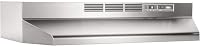
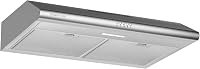
What Is a Ductless Range Hood and How Does It Work?
A ductless range hood pulls cooking air through a grease filter and a charcoal filter, then sends the filtered air back into the room. It needs no outside duct, so it suits kitchens where a duct can't be run.
On this page (11 sections)
- What is a ductless range hood, and what is inside?
- How does air move through a ductless range hood?
- What do the numbers on a ductless range hood mean?
- What can a ductless range hood do well?
- What can a ductless range hood not do?
- Does a ductless range hood need a charcoal filter?
- What upkeep does a ductless range hood need?
- What types of ductless range hoods are there?
- Who should choose a ductless range hood?
- What do first-time buyers get wrong about ductless hoods?
- Choose a ductless range hood when your kitchen has no vent
Here is what a ductless range hood is: a hood that filters cooking air and returns it to the kitchen instead of sending it outside. A grease filter catches oil and spatter, and a charcoal filter takes care of cooking odors.
That makes it the usual choice for condos, apartments, mobile homes and older kitchens with no duct. You'll also see the same thing called a recirculating, non-ducted or ventless hood.
Our complete guide to ductless range hoods covers every type in one place.
What is a ductless range hood, and what is inside?
A ductless range hood is a single housing with a fan, a light and two filters, and no duct leading outside. It mounts under a cabinet or on a wall, and the fan moves air through the filters and back into the room.
On the CIARRA CAS75918A, ductless mode sends the air back out through a front opening, the top outlet gets a cover, and an adjuster on the motor housing is set to the ductless position.
The grease filter in a ductless range hood
The grease filter is the first part the air meets, and it catches oil and spatter before they reach the charcoal. That keeps the charcoal filter from clogging with grease.
Styles vary. CIARRA uses 5-layer aluminum mesh filters, while Empava uses stainless steel baffle filters.
The charcoal filter in a ductless range hood
The charcoal filter, also called a carbon filter, handles odors once the air has passed the grease filter. Broan says the one in its 413004 removes smoke and odors, and that the hood installs as non-ducted only with that filter in place.
Most makers sell charcoal filters as replacement parts, so plan to buy new ones over time. Your manual says whether yours can be cleaned.
How does air move through a ductless range hood?
The fan draws cooking air up through the grease filter, then through the charcoal filter, and releases it back into the room. Nothing exits the house, so the two filters do all of the work.
That is why filter care matters more here than on a ducted hood. A clogged grease filter or a worn charcoal filter means weaker airflow and more odor drifting back into the kitchen.
Fan speeds are simple. CIARRA suggests low for light ventilation, medium for everyday cooking and high for stir-frying, and Broan's 413004 has two speeds on a rocker switch separate from the light.
What do the numbers on a ductless range hood mean?
Three numbers matter most: size, airflow in CFM and noise. This table puts three real hoods side by side.
| Hood | Size (W x D x H) | Airflow | Venting |
|---|---|---|---|
| Broan-NuTone 413004 | 30 x 17.5 x 6 in | 100 CFM | Ductless only |
| CIARRA CAS75918A | 29.76 x 13.39 x 3.94 in | 200 CFM | Ducted or ductless |
| Empava 30 inch | 29.53 x 19.69 x 6.1 in | 300 CFM | Four setups, including ductless |
CFM means cubic feet of air per minute, so a higher number moves more air. Airflow in ductless mode is often lower than the printed rating, because the charcoal filter slows the air.
Noise comes in two units. CIARRA gives 6.5 sones at its highest speed and Empava gives 69 dBA, and those two don't convert directly, so compare sones with sones and decibels with decibels.
What can a ductless range hood do well?
A ductless range hood catches grease and helps with cooking odors and smoke, as long as the filters are clean. In a kitchen with no duct, that is its main job.
Catching grease at the hood should also mean less oil settling on the cabinets above the stove.
Installation is often simpler too. No duct has to run through a wall or ceiling, and some models plug in: the CIARRA CAS75918A comes with a 3-prong plug, and Empava describes its 30 inch hood as plug-in.
What can a ductless range hood not do?
A ductless range hood can't remove heat, moisture or combustion gases from the room, because the filtered air goes straight back in. Steam from pots and heat from the burners stay in the kitchen.
That is why a hood that vents outside is the stronger setup for a gas range or for frequent frying. Ductless is the practical answer when a duct isn't possible, but it isn't a substitute for venting.
For the honest trade-offs, read do ductless range hoods really work and ductless vs ducted range hoods. If you cook on gas, check your range and hood manuals, and ask a qualified pro if you're unsure about your setup.
Does a ductless range hood need a charcoal filter?
Usually, yes, because the charcoal filter is what handles odors once the air returns to the room. Check whether it comes in the box, since some makers sell it separately.
CIARRA's CAS75918A works ducted with its mesh filters alone. For ductless mode it needs the optional CACF006 carbon filter, which CIARRA says to replace every 2 to 4 months, or more often with heavy use.
Filters fit by model number, not by brand. The CACF006 names the CAS75918A, CAB75918B and CAS75905 hoods, among others, so check the number on your own hood before you order.
How long charcoal range hood filters last covers replacement timing in more detail.
What upkeep does a ductless range hood need?
Two routines: wash the metal grease filters and replace the charcoal filter. Empava describes its baffle filters as dishwasher safe and says they can be washed an unlimited number of times.
The charcoal filter is the replacement part. CIARRA's CACF006 twists onto the motor and locks in place, and CIARRA says no tools are needed.
Write the date on the filter or your calendar when you fit a new one, so the next change doesn't slip.
What types of ductless range hoods are there?
Ductless hoods come as under-cabinet, convertible and wall-mount models. Which one fits depends on your cabinets, your wall and whether you might vent outside later.
Under-cabinet hoods mount beneath a cabinet and suit a standard 30 inch range. Convertible hoods run ducted or ductless, so you can change your setup later without buying a new hood.
Wall-mount hoods hang on the wall above the cooktop, which helps when no cabinet sits over the range. Insert hoods fit into a cabinet opening or a chimney, so measure that space before you choose one.
The best ductless range hoods roundup compares specific models across these types.
Who should choose a ductless range hood?
A ductless hood suits a kitchen with no outside duct, such as a rental, a condo or a mobile home. It also suits a kitchen where a new duct would be hard to run or the lease rules it out.
Before you buy, look for an existing duct on the wall, ceiling or behind the cabinet. If one is there, a ducted hood may be the better match.
The best recirculating range hoods roundup covers under-cabinet, insert and wall-mount models, so you can compare styles side by side.
What do first-time buyers get wrong about ductless hoods?
The usual slips are small, and each one is easy to avoid.
- Skipping the carbon filter. Without it, a convertible hood like the CIARRA CAS75918A can't run ductless.
- Buying a filter by brand. Filters fit by model number, so match the number on your own hood.
- Ignoring depth. The Empava is 19.69 inches deep and the CIARRA is 13.39, so measure the space under your cabinet.
- Forgetting the bulb. Broan's 413004 takes a bulb up to 75 watts, and the bulb isn't included.
- Mounting too low. Broan says the 413004 should sit at least 18 inches above the cooktop, and other hoods set their own minimum.
Choose a ductless range hood when your kitchen has no vent
Choose a ductless range hood if your kitchen has no outside duct and you're willing to change filters on schedule. Choose a ducted hood if you cook on gas or fry often and a duct path already exists.
The next step is the mounting itself, which how to install a ductless range hood walks through.
Frequently asked questions
What is a ductless range hood?
A ductless range hood filters cooking air through a grease filter and a charcoal filter, then sends it back into the kitchen. It needs no outside duct, so it suits condos, apartments and kitchens with no vent, but it does not remove heat, steam or combustion gases.
Does a ductless range hood need a charcoal filter?
Usually, yes, because the charcoal filter is what handles odors once the air returns to the room, and some makers sell it separately. Filters fit by model number, so check the number on your own hood before you buy a replacement.
Is a ductless range hood as good as a ducted hood?
Not for every job, since a ducted hood sends air outside, which makes it the stronger setup for gas ranges and heavy frying. A ductless hood still catches grease and helps with odors, so it is a practical choice when a duct is not possible.
How often should you change a ductless range hood filter?
Follow your manual first, since makers differ, but CIARRA says to replace its CACF006 carbon filters every 2 to 4 months, or sooner with heavy use. The metal grease filters are the washable part, and the charcoal filter is usually the one you replace.