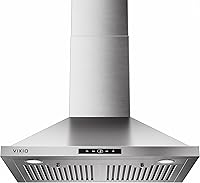
Under Cabinet vs Wall Mount Range Hood
An under cabinet range hood mounts under a cabinet, while a wall mount range hood mounts to the wall above the cooktop and needs no cabinet. Pick under cabinet when you have a cabinet over the range and want more airflow, and pick wall mount when there's no cabinet over the range.
On this page (19 sections)
- Under cabinet vs wall mount range hood: where each one mounts
- Which one moves more air?
- The specs side by side
- Noise and fan speeds
- Lights, controls and filters
- Venting and the ductless question
- Installation and space
- Cabinet height and clearance
- Style and finish
- Cleaning the filters
- Can the wall model switch between ducted and ductless?
- Weight and handling
- Cooking style and the right mount
- Worked example: two kitchens, two mounts
- Which kitchens suit an under cabinet hood?
- Which kitchens suit a wall mount hood?
- Questions to ask before you buy
- Mistakes to avoid
- Under cabinet or wall mount range hood: which to pick
An under cabinet range hood hangs from the underside of a cabinet, so it needs a cabinet above the cooktop. A wall mount range hood mounts to the wall above the cooktop, so it works when there is no cabinet over the range.
Our ductless range hoods guide covers the wider set of hood types. This page focuses on the mounting choice and what it changes about airflow, noise and venting.
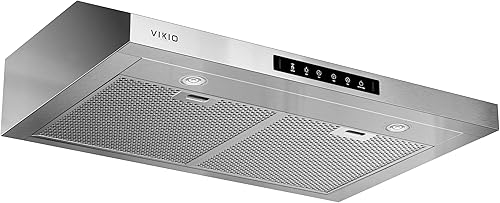 Best for high-heat cooking
VIKIO HOME 30 Inch Under Cabinet Range Hood
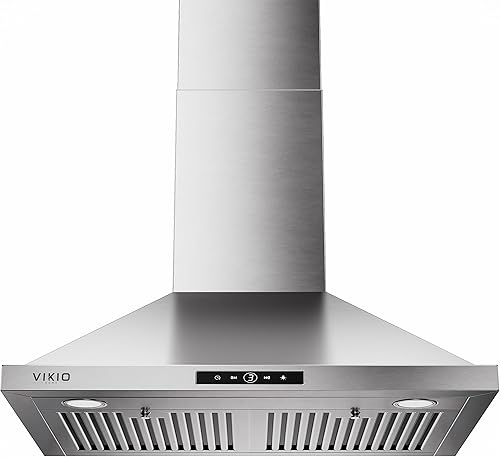 Best for ducted or ductless setups
VIKIO HOME 30 Inch Wall Mount Range Hood
Under cabinet vs wall mount range hood: where each one mounts
The main difference is the mounting spot. Under cabinet hoods need a cabinet or shelf above the cooktop, and wall mount hoods do not.
What an under cabinet range hood needs
An under cabinet range hood attaches to the underside of a cabinet or shelf. VIKIO's 900 CFM model is 6 inches tall and 29.5 inches wide, so it sits low and tight under the cabinet.
What a wall mount range hood needs
A wall mount hood attaches to the wall above the cooktop, so you don't need a cabinet over the range. VIKIO's 580 CFM wall model is 41 inches tall, so it takes up far more vertical space than the under cabinet unit.
Which one moves more air?
The under cabinet VIKIO has the bigger airflow figure, at 900 CFM against 580 CFM for the wall model. Both are maker figures, and makers usually measure them with a duct attached.
The under cabinet model uses dual motors to reach the higher number. VIKIO says it clears grease, steam and odors from a 150 square foot kitchen in 120 seconds.
The wall model uses a dual-intake design, which VIKIO says moves 20% more air than single-intake hoods.
Airflow only helps if the hood catches the smoke, so hood width and mounting height matter as much as the number.
A quick airflow check for a gas range
A common rule of thumb for gas is about 100 CFM for every 10,000 BTU of burner output. Check your range's BTU rating and your hood's manual, since the rule is only a starting point.
Burners totaling 40,000 BTU, for example, would suggest about 400 CFM by that rule. Both VIKIO figures clear it on paper, but a duct is still the stronger setup for gas.
The specs side by side
Both VIKIO hoods are about 30 inches wide, so width is the same. Mounting and airflow decide the choice.
| Product | Best for | Width | Airflow | Mounting | Our score |
|---|---|---|---|---|---|
| VIKIO HOME 30 Inch Under Cabinet Range Hood | high-heat cooking | 29.5 in | 900 CFM | Under cabinet | 8.8 |
| VIKIO HOME 30 Inch Wall Mount Range Hood | ducted or ductless setups | 29.3 in | 580 CFM | Wall mount | 8.4 |
We compared the specs and what buyers often mention, then scored each hood against a kitchen with a cabinet or an open wall above the range. Our score weighs specs, features and buyer feedback against what you're shopping for.
The under cabinet model scores higher for airflow and controls. The wall model scores a bit lower, but it's the practical pick for a kitchen with no cabinet over the range.
Noise and fan speeds
VIKIO says the under cabinet model runs as low as 35 dB, and the wall model as low as 40 dBA. Those numbers use slightly different scales, so treat them as rough guides.
Both hoods get louder on high, and VIKIO says each stays under 65 dB or 65 dBA at full power. Run the lower speed for everyday simmering, and save the higher speed for searing and frying.
Lights, controls and filters
Both VIKIO hoods use touch control and dishwasher-safe filters. The under cabinet model adds gesture sensing and a 3-minute delay shut-off, while the wall model's delay runs from 1 to 9 minutes.
The under cabinet model uses standard GU10 bulbs, which VIKIO says are easy to swap in about a minute. The wall model's LED cooktop lights use up to 30% less energy than halogen lights, according to VIKIO.
Venting and the ductless question
The wall mount model can run ducted or ductless with a carbon filter kit sold separately. The under cabinet model doesn't describe a ductless setup, so check its manual before you plan a no-vent install.
VIKIO's wall model includes a flexible 6 inch duct, so plan on venting it outside unless you add the carbon kit. The under cabinet model comes with a rectangular duct adapter, which points to a ducted setup.
Installation and space
Both hoods need power at the install spot, and both need a duct route if they vent outside. The wall model also needs clear wall space for its 41 inch height.
The under cabinet model fits in the space under a cabinet, so it needs no wall space beyond that. It comes with a screw set and a positioning template, and the wall model comes with a mounting hardware kit.
Follow the manual for the mounting height and for any wiring, and use a qualified electrician if you're unsure. Measure first, then mark the clear wall or cabinet space and compare it with each model's size.
Cabinet height and clearance
The cabinet bottom sets the height for an under cabinet hood, while the open wall sets the height for a wall mount hood. Measure both before you buy, since either one can rule out a model.
A wall mount hood often comes with its own height rule. SNDOAS, for one, says to place its wall hood 26 to 30 inches from the cooking surface, and its chimney adjusts from 22.8 to 37.8 inches tall.
Each maker gives its own number, so use the one in your hood's manual. VIKIO's wall model is 41 inches tall, which is the figure to check against your wall and ceiling.
Style and finish
Both VIKIO hoods come in a brushed stainless finish, so they suit kitchens with stainless appliances. The wall model has a pyramid shape that VIKIO says fits both modern and traditional kitchens.
VIKIO says that model's brushed finish resists fingerprints and smudges. The under cabinet model is also scratch resistant and stain resistant, according to VIKIO.
Its 6 inch body gives it a low profile under the cabinet.
Cleaning the filters
Both VIKIO hoods use dishwasher-safe filters, so cleaning takes a few minutes rather than a long scrub. The filters are the part you'll touch most.
The under cabinet model uses 5-layer aluminum mesh filters, which VIKIO says trap grease before it reaches the motor. Put them in the dishwasher for a quick clean.
The wall model's two stainless baffle filters pop out without tools, according to VIKIO. You can toss them in the dishwasher or wipe them clean.
If you fry or sear often, clean the filters more often. A greasy filter cuts airflow and makes the hood less effective.
Can the wall model switch between ducted and ductless?
Yes, the wall model can switch between ducted and ductless use with a carbon filter kit that's sold separately. Ducted use relies on the flexible duct and a route to the outside, while ductless use swaps that route for the filter kit.
Ductless mode recirculates air back into the room, so it doesn't vent heat, moisture or combustion gases outside. Keep that in mind if you cook on a gas range or fry often.
Check the manual for the exact steps and the right kit before you buy. The under cabinet model doesn't describe a ductless setup, so don't plan on one without checking.
Weight and handling
Both VIKIO hoods weigh about 24 pounds, so plan on two people to lift and mount either one. The under cabinet model is 11 kg, and the wall model is 23.8 pounds.
The wall model hangs from the wall, so follow the manual for what the wall must support. Use the mounting hardware in the box.
Cooking style and the right mount
Heavy frying and searing favor the under cabinet hood's bigger airflow figure, while light cooking suits either mount. If the space forces a wall model, check that its ducted or ductless setup fits your plans.
If you fry, sear or stir-fry often, the 900 CFM under cabinet model gives you more margin. A wall model works well for lighter meals, as long as the wall space and venting suit your kitchen.
Worked example: two kitchens, two mounts
A cabinet above the range points to the under cabinet model, and an open wall with no outside vent points to the wall model with its carbon kit. Here is how that plays out.
Kitchen one: a cabinet over the range and a wall behind it
The range has a cabinet overhead and an outside wall right behind it. The under cabinet VIKIO fits, since it is 6 inches tall and has 900 CFM.
It also comes with a rectangular duct adapter with a damper, so the duct can go straight through the wall behind the range.
Kitchen two: an open wall and no outside vent
The range sits against an inside wall with no cabinet above and no way to duct. The wall VIKIO fits, with its carbon kit bought alongside the hood, after you confirm that its 41 inch height clears your ceiling.
Ductless mode has limits, so if this kitchen has a gas range, a ducted hood is still the stronger setup. In that case, ask a qualified pro whether a duct could be added.
Which kitchens suit an under cabinet hood?
An under cabinet hood suits a kitchen with a cabinet or shelf above the cooktop and a need for more airflow. It's also the simpler choice when the cabinet is already there.
- You have a cabinet above the cooktop.
- You want the bigger airflow figure.
- You have a duct route to the outside.
If you're torn between a hood and a microwave, read our under cabinet range hood vs microwave comparison.
Which kitchens suit a wall mount hood?
A wall mount hood suits a kitchen with no cabinet above the cooktop, or one where you want the option to go ductless later. It works well when the wall above the range is clear and you have room for its height.
- There's no cabinet over the range.
- You may switch between ducted and ductless with a kit.
- You have clear wall space for a taller unit.
If there's no cabinet above your range, see our guide on using an under cabinet hood without a cabinet. For more wall options, our best wall mount ductless range hoods list is a good next step.
Questions to ask before you buy
Ask these four questions before you order, since they settle the mount for most kitchens and can save a return.
- Is there a cabinet bottom above the cooktop, and how high is it?
- How much clear wall space is above the cooktop?
- How far is the nearest outside wall or roof from the cooktop?
- Does the model you like need a carbon kit for ductless use?
If the answer to the first question is no, a wall mount model is the simpler path. Keep your answers with your measurements, so you can check each model against them before you pay.
Mistakes to avoid
Most mistakes come from buying the wrong mount for the wall, or from assuming the wall model is always ductless. Watch for these five.
- Buying an under cabinet hood for a kitchen with no cabinet above the range.
- Assuming the wall model runs ductless without its carbon kit.
- Ignoring the 41 inch height of the wall model in a kitchen with a low ceiling.
- Mounting an under cabinet hood some other way without checking the manual.
- Comparing the 900 CFM and 580 CFM figures without asking how each hood will be vented.
Under cabinet or wall mount range hood: which to pick
Pick the under cabinet hood if you have a cabinet above the cooktop and want more airflow. Pick the wall mount hood if there's no cabinet over the range.
Measure the cabinet bottom or the open wall above the cooktop before you order. For more under cabinet picks, see our best under cabinet range hoods list.
Frequently asked questions
Is a wall mount range hood as strong as an under cabinet hood?
It depends on the model, since VIKIO's under cabinet hood has the bigger airflow figure at 900 CFM against 580 CFM for its wall model. Compare the airflow and the duct route for each model, because makers usually rate CFM for ducted use.
Can a wall mount range hood work without a duct?
Yes, if the model is set up for ductless use with a carbon filter kit. VIKIO's wall model can run ductless with that kit, which is sold separately, so check the manual and buy the kit before you install the hood.
Do I need a cabinet to mount a range hood?
Not for a wall mount hood, which attaches to the wall above the cooktop and needs no cabinet at all. An under cabinet hood needs a cabinet or shelf above it, so check the manual and measure the space before you mount one another way.
Is a wall mount range hood taller than an under cabinet one?
Yes, VIKIO's wall model measures 41 inches tall, while its under cabinet model measures 6 inches tall. The taller wall unit needs clear wall space above the cooktop, so measure that space before you choose, especially in a kitchen with a low ceiling.