Range Hood Charcoal Filter vs Grease Filter
A range hood grease filter traps cooking oil before it reaches the fan, while a charcoal filter absorbs cooking odors and is the filter a ductless hood depends on. Most hoods need a grease filter, and ducted hoods usually skip the charcoal filter because they send the air outside.
On this page (19 sections)
- What a grease filter does
- What a range hood charcoal filter does
- How air moves through each filter
- What each filter is made of
- How grease builds up and why it matters
- Sizing the filter to your hood
- What your cooking style does to each filter
- Cleaning routine for each filter
- Signs it's time to change or clean each filter
- Do you need a charcoal filter?
- Hoods that ship without the charcoal filter
- Which filter does which job?
- How to clean each filter
- How often to replace the charcoal filter
- Worked example: a Broan 43000 series hood running ductless
- Which filter should you buy?
- Tips for buying replacement filters
- Common mix-ups to avoid
- Charcoal filter or grease filter: which do you need?
Most range hoods use a grease filter to catch oil from the air. A ductless hood also needs a charcoal filter to absorb odors, because it sends the cleaned air back into the room.
The two filters do different jobs, so one can't stand in for the other.
If you're shopping for a ductless setup, our ductless range hoods guide explains the full system. This page covers only the two filters and how to tell them apart.
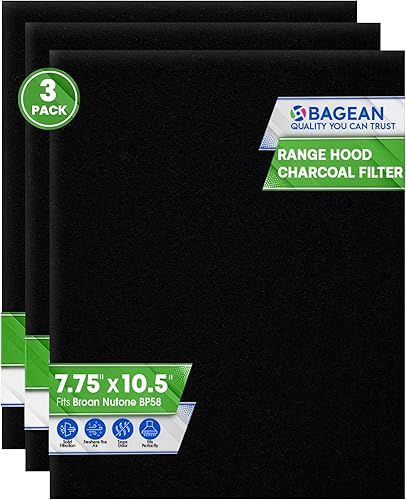 Best for Broan BP58 replacements
Bagean Charcoal Filter for Broan BP58

What a grease filter does
A grease filter is the first filter the air hits, and its job is to catch cooking oil before it reaches the fan and motor. Bagean's aluminum grease filter is a mesh panel built for that job.
It measures 11.8 by 14.3 inches and comes as a two-pack. Bagean says it is thicker than standard, blocks more grease and has a frame that resists bending.
A grease filter works in both ducted and ductless hoods, because grease is a problem either way.
What a range hood charcoal filter does
A charcoal filter absorbs cooking odors as air passes through it, and it's the filter a ductless hood depends on. Without it, a recirculating hood would send smelly air straight back into the kitchen.
Why the range hood charcoal filter sits second
Activated carbon grabs odor particles as air moves through the filter. Bagean says its carbon filter is enhanced for better odor absorption.
Grease clogs a charcoal filter quickly, so it works best behind a grease filter. Bagean builds that order into its install steps: connect the charcoal pad to the aluminum grease filter, then place both in the hood.
How air moves through each filter
In a ductless hood, air passes through the grease filter first and then the charcoal filter before it returns to the room. In a ducted hood, air goes through the grease filter and out the duct.
The fan pulls cooking air up toward the filters, so the grease filter faces the cooking area. The air then moves on, toward the charcoal filter in ductless use or the duct in ducted use.
That order matters. If the charcoal filter sat in front of the grease filter, grease would reach it first and the odor filter would clog sooner.
What each filter is made of
Grease filters are usually aluminum mesh, while charcoal filters are a pad or sheet of activated carbon. The two materials need different care.
Aluminum mesh is metal, so it holds up to heat and can be washed. Bagean's grease filter has a reinforced frame that helps it keep its shape.
Bagean's charcoal filter is a pad, and the carbon inside it is what absorbs the smells. Carbon is porous, so it has a large surface area for trapping odor particles.
Harsh cleaners can damage aluminum, so use mild soap and water on the grease filter.
How grease builds up and why it matters
Grease builds up on the grease filter first, and it can clog the charcoal filter behind it if the grease filter is missing or dirty. Each cooking session leaves a little more oil on the filter.
That film slows the airflow over time, and a dirty filter makes the hood work harder to move the same air. A charcoal filter with grease on it also loses its odor power quickly, so the two filters work as a team.
Built-up grease is also a reason to keep the grease filter clean for safety, so check your manual for how often to clean it.
Sizing the filter to your hood
A filter has to match your hood's size and model, and width alone isn't enough. Bagean sells grease filters in other sizes too, such as 8 by 8 inches and 11.8 by 17.35 inches.
The charcoal pad in this comparison is 7.75 by 10.5 inches, a much smaller piece than the 11.8 by 14.3 inch grease filter. Measure the old filter before you buy, and write down the length, width and thickness.
Check the model number on the hood as well, since two hoods can share a filter size and still need different parts. If your hood is a Broan, Broan-NuTone's site is a good place to start for its manual and part numbers.
What your cooking style does to each filter
Frying and searing load the grease filter faster, while strong-smelling food wears the charcoal filter sooner. Your cooking habits set how often each filter needs attention.
Bacon, burgers and stir-fry throw more grease into the air, so check the grease filter after those meals. Boiled pasta or steamed vegetables put little grease in the air, so the grease filter lasts longer on those days.
Odors from strong foods still reach the charcoal filter, though, so that one may need changing first.
Cleaning routine for each filter
Clean the grease filter after heavy frying, and check the charcoal filter by smell when cooking odors linger. Those two checks cover most of the upkeep.
Wash the grease filter in hot, soapy water until the oil film is gone, and let it dry fully before you put it back. Don't scrub aluminum with steel wool, since scratches make the metal harder to clean later.
A charcoal filter usually can't be washed back to new, so swap it when the odor returns. Keeping a spare grease filter lets you swap in a clean one while the other soaks, which keeps the hood working through busy weeks.
Signs it's time to change or clean each filter
Clean the grease filter when it looks dark or greasy, and replace the charcoal filter when odors come back. Watch for these signs.
- The grease filter looks dark, sticky or shiny with oil.
- The grease filter has a bent frame or has lost its shape.
- Odors come back quickly after cooking, which points to the charcoal filter.
- Smoke or steam hangs around longer than it used to.
A bent frame can let air slip around the filter, so replace it if the shape is off.
Do you need a charcoal filter?
You need a charcoal filter for ductless use, and ducted hoods usually don't use one. A ductless hood pulls air through the grease filter and the charcoal filter, then sends it back into the room.
A ducted hood sends the air outside, so it usually doesn't need a charcoal filter at all. Some hoods can switch modes with an extra kit, such as the Cosmo COS-5MU30 with its CFK4 carbon filter kit, which is sold separately.
A charcoal filter handles odors only. It won't fix heat, moisture or combustion gases, so a ducted setup is still the stronger choice for gas cooking.
Hoods that ship without the charcoal filter
Many hoods that can run ductless ship with grease filters only, so the charcoal filter is a separate purchase. Cosmo's COS-5MU30 needs the CFK4 kit, CIARRA's CAS75918A needs the CACF006 filter, and SNDOAS's 30 inch hood needs the CF-0475.
Each of those numbers belongs to its own hood. Read the part number in your manual before you order, since a charcoal filter for another model may not fit.
Which filter does which job?
A grease filter stops the oil, and a charcoal filter stops the smell. The two work best when they're used together in the right setup, not swapped for each other.
Use this quick reference to sort them out:
| Grease filter | Charcoal filter | |
|---|---|---|
| Catches | Cooking oil and grease | Cooking odors |
| Material | Aluminum mesh | Activated carbon pad |
| Care | Wash when it looks greasy | Replace when odors return |
| Needed in a ducted hood | Yes | Usually not |
| Needed in a ductless hood | Yes | Yes |
How to clean each filter
Grease filters are the ones you wash on a regular basis, while charcoal filters are usually replaced. Washing a grease filter keeps the grease from building up and slowing the fan.
Most makers sell charcoal filters as replacement parts, so check your model's manual before you try to clean one. For the full answer, read can you wash range hood charcoal filters.
How often to replace the charcoal filter
Replace a charcoal filter when odors come back, and plan on a schedule that depends on how often you cook. Heavy cooking fills the filter faster, so frequent frying means more frequent swaps.
Makers give different intervals. Broan says every 6 months for its HPF30 filter, CIARRA says every 2 to 4 months for its CACF006, COMFEE' says every 3 to 4 months for its CVU30-F, and SNDOAS says every 3 to 6 months for its CF-0475.
Bagean gives no interval for the BP58 pad, but says its BPSF30 charcoal filter should be replaced every six months. Our guide to how long charcoal range hood filters last covers the intervals in more detail.
Worked example: a Broan 43000 series hood running ductless
Say your ductless hood is a Broan 43000 series. Bagean says its charcoal pad fits that series and the BP57 Broan grease filter, so the pad rides on the grease filter and both go in together.
The pack holds three pads. If you swap every 4 months, three pads last about a year, and swapping every 6 months stretches them to a year and a half.
Bagean's aluminum grease filter in this comparison is a separate part, made for the Allure QS1, QS2 and WS1 30 inch series. Bagean doesn't list the 43000 series for it, so match each filter to its own hood list.
Which filter should you buy?
Buy the filter that matches your hood's model number, and buy a charcoal filter only if your hood runs ductless. A charcoal filter is a second purchase on top of the grease filter.
Bagean's charcoal filter is made for Broan and NuTone BP58 parts and 43000 series hoods. Bagean's grease filter is made for the Allure QS1, QS2 and WS1 30 inch series.
The two aren't a matched set, so each one has to match its own hood.
Work through the purchase in this order:
- Decide whether your hood vents outside or runs ductless.
- Read the model number on the hood.
- Find the grease filter that number lists, and add the charcoal filter only if the hood runs ductless.
Tips for buying replacement filters
Buy by model number, check the size, and skip any cut-to-fit sheet unless you can measure and trim it. Each of those steps prevents a wrong order.
- Check the model number printed on your hood or in its manual.
- Compare the length, width and thickness with the filter you're replacing.
- Look at the pack count, so you know how many swaps you're getting.
- Skip cut-to-fit sheets unless you can measure and trim them safely.
Bagean's charcoal filter comes in a pack of three, and its grease filter comes as a two-pack, so count your swaps before you buy.
Filters fit by model number, not by brand alone, because one brand can use several filter sizes. For more replacement picks, see our best charcoal filters for range hoods list.
Common mix-ups to avoid
Most mix-ups come from thinking one filter does both jobs, or from buying the wrong filter for the hood. Watch for these five.
- Thinking a charcoal filter can replace the grease filter.
- Running a ductless hood without its charcoal filter.
- Ordering by filter size alone instead of model number.
- Skipping the grease filter when you install the charcoal one.
- Spraying a degreaser on an aluminum filter without reading the label.
Charcoal filter or grease filter: which do you need?
Almost every hood needs a grease filter, and only ductless hoods need a charcoal filter on top of it. Your hood's venting decides which filters matter most.
If you vent outside, the grease filter matters most. If you run ductless, keep both filters in place and change the charcoal one on schedule.
To learn the swap itself, read our guide to replacing a charcoal filter in a range hood.
Frequently asked questions
Do I need a charcoal filter and a grease filter?
Most range hoods need a grease filter to catch oil, and ductless hoods also need a charcoal filter for odors. A ducted hood usually doesn't need a charcoal filter, since it sends the air outside and skips the recirculating step.
Can a charcoal filter replace a grease filter?
No, a charcoal filter absorbs odors but isn't made to catch grease, so grease can clog it quickly. Keep the grease filter in place, and use a charcoal filter only for ductless use, as your manual describes, since the setup varies by model.
How often should I change a charcoal filter?
Makers differ: Broan says every 6 months for its HPF30 filter, CIARRA says every 2 to 4 months for its CACF006, and SNDOAS says every 3 to 6 months. Heavy frying shortens the life, so change yours when odors return and follow your hood's manual.
Can I wash a charcoal filter in the dishwasher?
Usually not, since most charcoal filters are sold as replacement parts and Bagean says its BPSF30 charcoal filter is not washable, unlike metal range hood filters. Check your model's manual before you try to wash one, since the grease filters are the ones people wash.